Use AI to Redesign a Living Room
A practical workflow for uploading a living room photo, choosing a style, comparing results, and avoiding common AI room design mistakes.
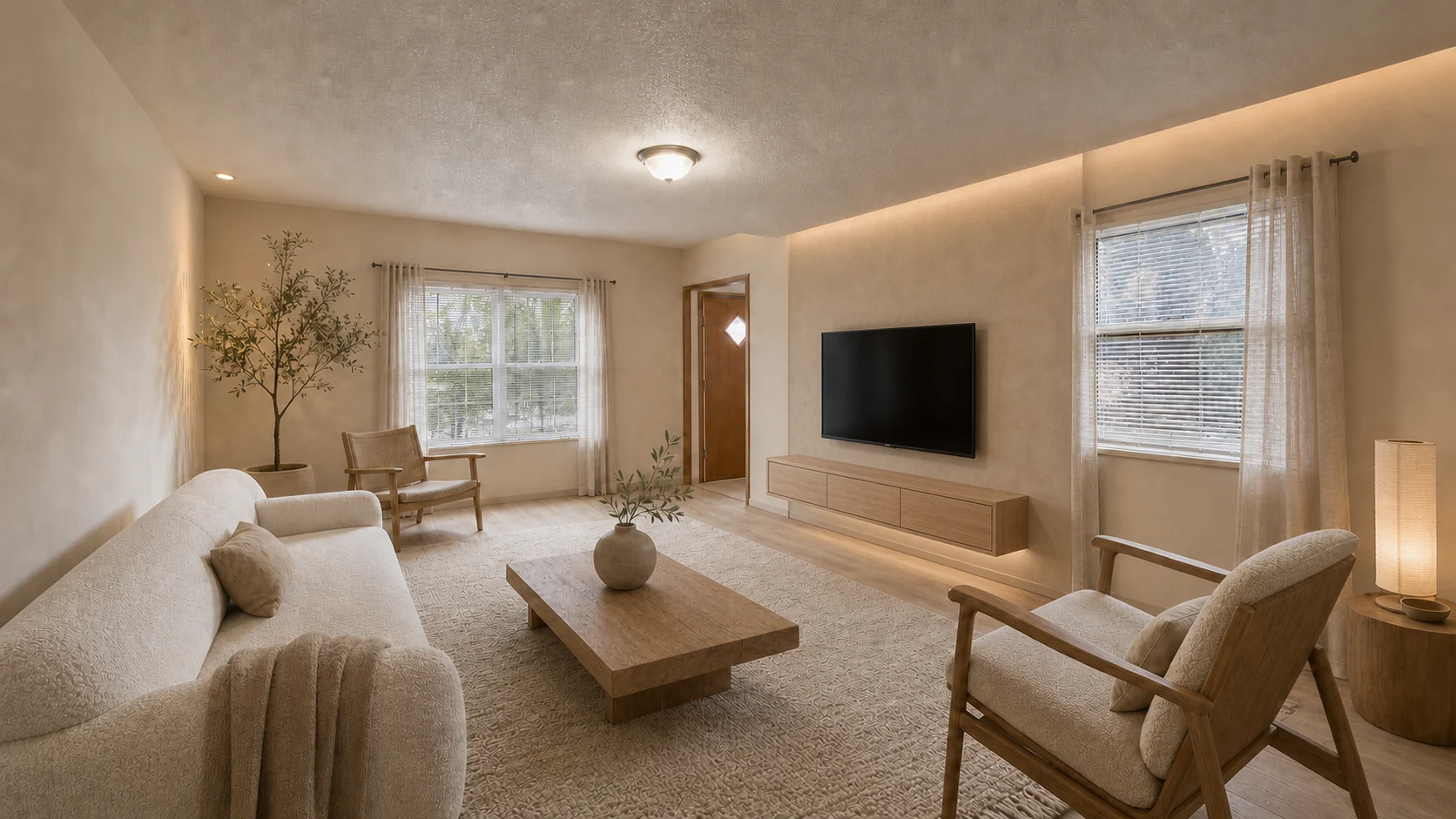
The fastest way to misuse an AI living room tool is to accept the first attractive render. A living room can look beautiful in an AI image and still be wrong for your budget, layout, light, or furniture you already own.
The better workflow is comparison.
Start with a clear photo
Use a bright photo taken from a corner or doorway. Include the floor, ceiling, windows, and main wall. If the image is cropped too tightly, the AI may invent furniture placement that cannot fit.
Avoid heavy filters. The model needs to read the real room, not a stylized phone edit.
Choose one style hypothesis
Do not ask for everything at once. A useful first test might be “Japandi living room with warm wood, lighter rug, and less clutter.” Another test might be “mid-century modern with walnut furniture and brighter wall color.”
Each run should answer one design question. If you combine too many goals, the result becomes harder to judge.
Choose how many outputs to compare
Multiple outputs expose weakness. One result may ignore the sofa wall. Another may make the room too formal. A third may solve lighting but choose the wrong furniture scale. When the decision matters, choose 2 or 4 candidates instead of judging the first image.
You are not searching for a perfect render. You are looking for the direction worth marking and refining.
Keep notes before you rerun
Before running another style, write down what worked. Maybe the lighter rug helped. Maybe the wood tone was right but the layout was wrong. Those notes become the next hypothesis.
The lab notebook is built for this. It keeps the original photo, style, variables, and selected results together.
Honest limits
AI can be weak at scale, real product availability, and detailed construction. A coffee table may be too large. Lighting may look better than your room can support. Built-ins can appear where they are expensive or impossible.
Use the result to narrow direction, then check measurements, budget, and product options before buying.
A simple living room test
Start with two runs: one calm style and one expressive style. For example, compare Japandi against mid-century modern. If both fail, the room may need a layout or lighting decision before a style decision.
That is still a useful result. Knowing what not to do can save money.
Test the direction on your own room
The guest path creates one public, watermarked 1K preview after explicit consent. Sign in and use Credits when the room needs to stay private or you want to refine versions.
Open Studio