AI Virtual Staging for Real Estate
A real estate guide to AI virtual staging: style, buyer expectations, disclosure, and why several candidates beat one image.
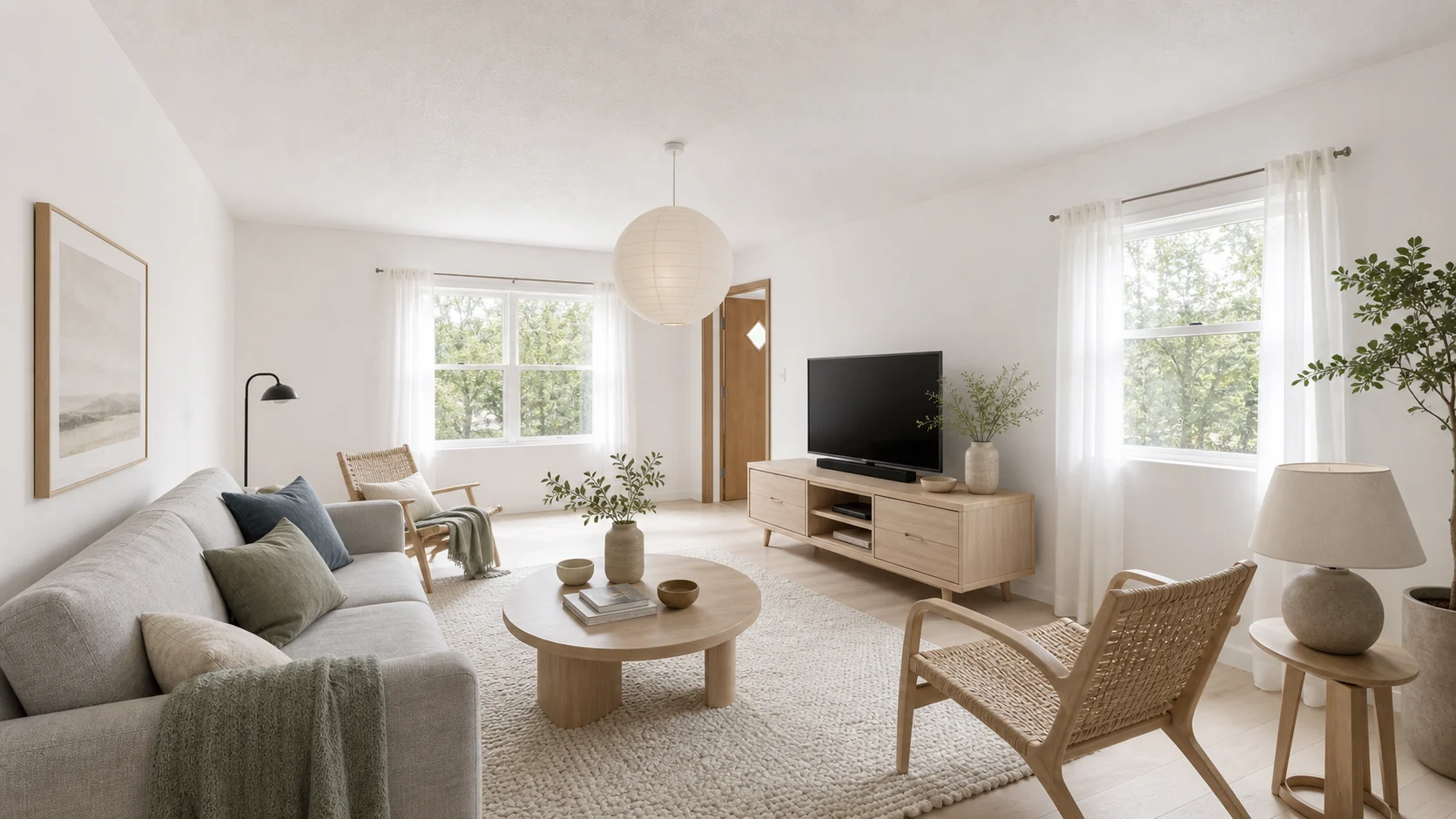
Virtual staging works because buyers often struggle to read an empty room. A vacant photo can make a good space feel cold, small, or hard to understand. AI can help, but real estate use needs more restraint than casual design inspiration.
The goal is not to create the most dramatic room. The goal is to help buyers understand the space without misleading them.
Preserve the architecture
The most important rule is structural honesty. Walls, windows, doors, built-ins, ceiling height, flooring transitions, and room proportions should stay readable.
If an AI result changes the room’s architecture, it may look better but become risky for listing use. That result belongs in an internal moodboard, not public marketing.
Test buyer-safe styles
For most listings, transitional, modern, organic modern, and light Scandinavian styles are safer than niche styles. A strong art deco or industrial look may appeal to some buyers and push others away.
Run several options, then choose the style that makes the room easiest to understand.
Use multiple candidates
One staging result can hide problems. Multiple candidates make it easier to catch unrealistic furniture scale, blocked traffic paths, strange lighting, or decor that makes the room feel smaller.
AI Interior Lab lets you choose 1, 2, or 4 candidates per photo, so the agent or seller can control both cost and comparison depth.
Be careful with disclosure
Disclosure rules vary by platform, MLS, market, and brokerage policy. AI Interior Lab cannot decide those rules for you. If you publish virtually staged photos, follow your local listing rules and make clear that images are staged when required.
Honest limits
AI staging can help buyers imagine use. It cannot replace accurate room dimensions, floor plans, condition notes, or in-person inspection. It can also produce furniture that does not exist or would not fit in the room.
Use AI staging to improve comprehension, then keep the listing truthful.
A good first workflow
Upload the vacant room. Run transitional and modern options. Save the version that keeps the room largest and clearest. If the AI changes architecture, rerun with a stricter hypothesis: “stage only with furniture and decor, keep all walls and windows unchanged.”
Test the direction on your own room
The guest path creates one public, watermarked 1K preview after explicit consent. Sign in and use Credits when the room needs to stay private or you want to refine versions.
Open Studio